

Choosing between water-based and plastisol ink for screen printing depends on your brand goals, garment type, and desired print quality. Plastisol ink is best for bold, vibrant designs on dark garments, offering strong opacity, durability, and consistent color matching—making it ideal for workwear, athletic apparel, and heavy cotton fabrics. Water-based ink, including discharge and HSA options, is preferred for premium and eco-friendly apparel, delivering a soft, breathable “no-hand” feel that integrates into the fabric. While water-based inks require specific materials like 100% cotton for best results, they provide a higher-end finish that lasts the life of the garment. Understanding the differences between water-based vs. plastisol ink helps brands choose the right screen printing method for performance, feel, and long-term value.
April 28, 2026

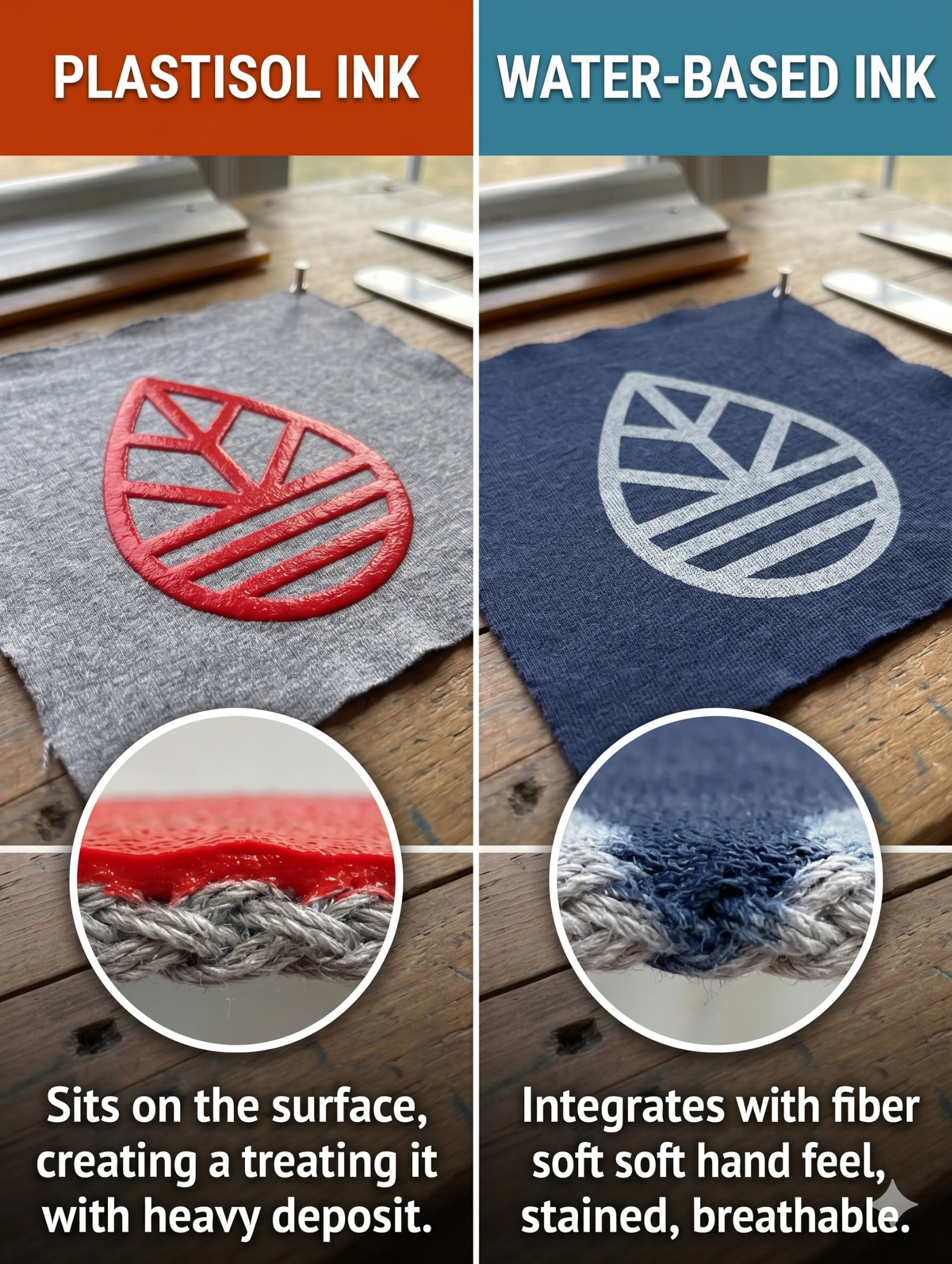
Selecting the right ink is an important decision. In order to make the right decision there are several factors to consider based on the garment you are using and the outcome you are looking for. The ink you choose will dictate the garment's physical feel but also impact the vibrancy and longevity. When evaluating water-based ink vs. plastisol screen printing you have to consider several factors outlined below
Plastisol ink has been the industry standard for decades. It is a PVC-based ink that requires heat to cure. Because it does not air dry, it is incredibly stable on the press. It sits on top of the fabric, creating a physical layer of plastic. This results in a durable print with a thicker "hand" or feel.
Water-based ink represents the shift toward premium, eco-conscious manufacturing. These inks use water and pigment that integrate into the fabric fibers. Instead of sitting on the surface, the ink becomes part of the garment itself, similar to how a dye or bleach works.
In professional merchandise, "hand" refers to the tactile weight of the print.
Let's break down each ink type and the pros and cons of each.
Feature
Plastisol Ink
Water-Based Ink
Surface Feel
Raised and textured
Soft and breathable
Dark Fabrics
High opacity and vibrancy
Best with discharge agents
Eco-Impact
Contains plastic resins
Water-soluble and PVC-free
Durability
Resilient; can crack/peel over time
Becomes part of fiber; won't crack
Fabric Type
Workwear and heavy fleece
Premium retail and 100% cotton
Opacity
Naturally opaque
Translucent by nature
Brands often make the mistake of choosing water-based ink for complex designs on dark polyester blends without realizing that water-based inks are naturally translucent and require specific fabrics for discharge printing.
Advantages & Trade-Offs:
If you are using 100% cotton shirts and you aren’t particularly worried about vibrancy or exact color matching than we would recommend discharge waterbased or HSA waterbased ink. This is especially true if you are using a soft or lightweight shirt fabric.
If you are looking for color accuracy and loud colors and don't mind a slight hand feel, than plastisol is the ink of choice


