

Can you scale apparel production without environmental guilt? The short answer is yes: screen printing is eco-friendly, but its sustainability depends entirely on a holistic approach. This means replacing low-sustainability, plastic-based Plastisol inks with water-based or carbon-negative Algae Ink, implementing closed-loop filtration systems for responsible shop operations, and—most crucially—choosing certified blanks that account for 70–80% of the garment’s total carbon footprint.
April 30, 2026

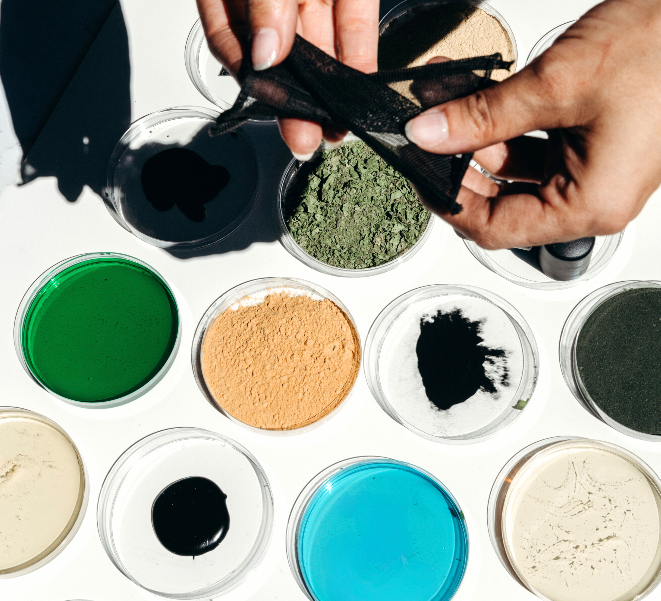
The apparel industry is currently facing a reckoning. For years, “scale” was synonymous with the sacrifice of quality, ethics, and, most notably, the environment. As a brand owner, franchise manager, or influencer, you’re likely feeling the pressure from a consumer base that demands transparency. You want to grow, but you don’t want your brand’s legacy to be a mountain of non-biodegradable waste and chemical runoff.
The question isn't just about whether you can print a "green" t-shirt; it’s about whether screen printing is sustainable as a viable business model or just a marketing pipe dream.
At Superior Ink, we’ve spent years refining the balance between high-volume output and eco-conscious practices. This guide breaks down the technical realities of eco-friendly production, the "ink wars," and what you as a brand actually need to consider before hitting print on your next large volume run.
Yes, screen printing is eco-friendly, but its sustainability depends entirely on three factors: the ink chemistry, the screen reclaiming process, and the source of the garments. While traditional methods involve heavy plastics and harsh solvents, modern "high-solids" water-based inks and closed-loop filtration systems have transformed the industry into a much cleaner operation.
While the production of printing the shirts plays a role, its the garment you are sourcing that will have the biggest impact. The difference between an organic cotton t-shirt and a conventional cotton shirt is significant in terms of water consumption and chemical usage.

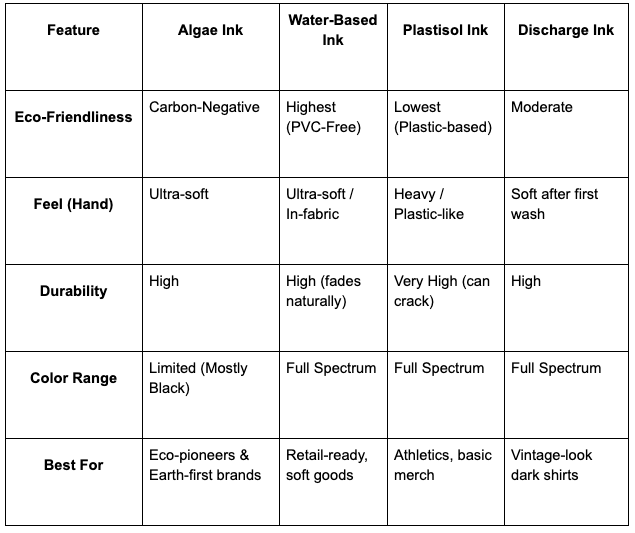
When asking is screen printing sustainable, the conversation usually begins and ends with ink. However, not all inks are created equal, and "eco-friendly" doesn't always mean "best for the job."
Water-based ink is a decorating medium that uses water as the primary solvent to carry the pigment to the fabric. Unlike traditional inks, these soak into the fibers rather than sitting on top.
Algae ink (such as that developed by Living Ink) represents the cutting edge of circular fashion. While traditional pigments, even in water-based inks, often rely on petroleum-derived carbon black, algae ink uses treated algae cells to create a rich, carbon-negative black pigment.
Plastisol is a plastic-based ink (PVC) that requires high heat to cure. It is the most common ink used in the world because it’s easy to use and stays "wet" on the screen indefinitely.
Discharge printing is a process where a clear "zinc-formaldehyde-sulfoxylate" (ZFS) agent removes the existing dye from a shirt and replaces it with new pigment.
A shop can use the "greenest" ink in the world, but if they are dumping chemicals down the drain during the cleaning process, they aren't sustainable.
Screen reclaiming is the process of stripping the emulsion (the "stencil") off a screen so it can be reused. Historically, this required heavy-duty degreasers and solvents that were toxic to both humans and the water supply.
If you are a brand looking to claim sustainability, ask your printer: "Do you use a closed-loop water filtration system in your reclaim room?" If they look at you sideways, they aren't as eco-friendly as they claim.
You cannot have a sustainable product if the "blank" garment was produced in a high-pollution, low-ethics environment. The garment itself accounts for roughly 70-80% of the total carbon footprint of a finished piece of apparel.
A common misconception is that "sustainable" means "slow." In the world of 3PL (Third-Party Logistics) and high-volume screen printing, efficiency is sustainability.
Sustainability at scale is achieved through waste reduction. When a shop is optimized for high-volume, every movement is calculated. Less "misprints" means less fabric in the landfill. Better "nesting" of designs means less screen waste.
At Superior Ink, we view our 3PL services as an extension of our sustainability mission. By housing your inventory, printing on demand (or in strategic batches), and shipping from a centralized hub, we reduce the "touches" and the carbon footprint of the shipping process itself.
Deciding whether is screen printing eco friendly enough for your specific brand goals requires weighing your priorities.
Priority: Maximum Profit Margins.
Priority: Retail Appeal & Brand Integrity.
Priority: Performance & Durability.
In our years of professional printing, we’ve seen brands fall into the "Greenwashing" trap thinking they are helping the planet by using recycled hangtags while printing on the cheapest, most chemically-heavy shirts available.
True sustainability is a holistic approach. It’s better to have a slightly more expensive shirt that lasts for 100 washes than a "recycled" shirt that falls apart in three, ending up in a landfill. Longevity is the ultimate form of sustainability. The most sustainable shirt is the one that lasts the longest.

Generally, water-based inks and sustainable processes carry a 10-15% premium. However, this is often offset by the higher retail value of the finished product. Consumers are consistently willing to pay more for transparently produced apparel. We at Superior ink however do not charge extra for using water-based. We feel a customer should not be penalized for making a positive decision.
Absolutely. Modern high-solids water-based inks can achieve nearly the same vibrancy as plastisol. While "neon" colors can be tricky, the vast majority of the Pantone spectrum is achievable.
It's a step in the right direction because it diverts plastic from landfills. However, it still releases microplastics during washing. We recommend recycled poly for outerwear or items that aren't washed daily.
Ask for their certifications (like GOTS or Sustainable Green Printing Partnership) and ask about their waste management. A truly eco-friendly shop will be proud to show you their filtration systems and ink types.
We didn't build Superior Ink to be just another print shop. We built it to prove that high-performance, high-volume apparel production doesn't have to destroy the planet.
From our meticulous water-based ink programs to our integrated 3PL services, we help brands scale without the environmental guilt. We understand that as a brand, you need more than a vendor; you need a partner who protects your reputation as much as your bottom line.
Whether you're an established franchise looking to "green" your supply chain or a growing brand ready for its first 1,000-piece run, we provide the expertise to make it happen sustainably.
Sustainability in screen printing is no longer a niche requirement; it is the new industry standard. By focusing on water-based inks, responsible chemical management, and ethical sourcing, brands can produce high-quality apparel that resonates with the modern consumer. The question isn't just "is screen printing sustainable"—it's whether your brand is ready to lead the charge.
Ready to elevate your brand with eco-conscious apparel? Contact Superior Ink today for a custom quote on your next sustainable project.


