
May 5, 2026
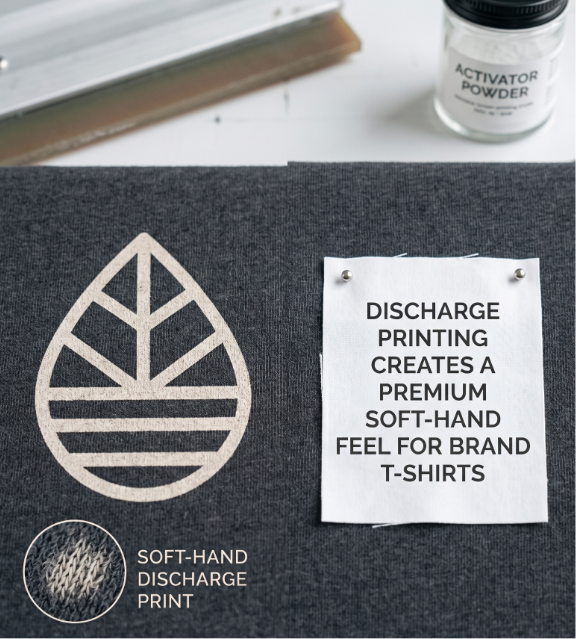
Discharge printing is a screen printing technique that uses a chemical activator to remove the dye from a garment and replace it with new pigment, resulting in a print that is part of the fabric rather than sitting on top of it. For brands seeking the ultimate "soft-hand" feel in custom apparel, discharge printing is the industry gold standard.
When a customer picks up a t-shirt, their first instinct isn’t to look at the tag, it’s to feel the print. If the design feels like a thick, plastic sweat patch on their chest, the shirt stays in the closet. If the print is undetectable to the touch, it becomes their favorite shirt.
At Superior Ink, we’ve spent years refining the science of high-end finishes. If you are building a lifestyle brand, a premium franchise, or high-end influencer merch, understanding discharge printing is essential to scaling your custom apparel quality.
Discharge printing is a "re-dyeing" process where a zinc formaldehyde sulfoxylate (ZFS) or similar discharge agent is mixed into water-based inks to bleach out the original fabric color and deposit new color in one pass.
Unlike traditional methods that add layers of material to a shirt, discharge printing subtracts. Here is the professional breakdown:
For the discharge process to work effectively, the garment must be 100% cotton or a high-cotton blend. Synthetic fibers like polyester are "solution-dyed," meaning the color is baked into the plastic of the thread and cannot be discharged. If you use a 50/50 blend, you’ll get a "heathered" or vintage look, which is often a desired aesthetic for modern streetwear brands.
The primary difference between discharge and plastisol ink is the physical profile; plastisol is a PVC-based ink that sits on top of the fabric, while discharge is a water-based chemistry that integrates into the fabric.
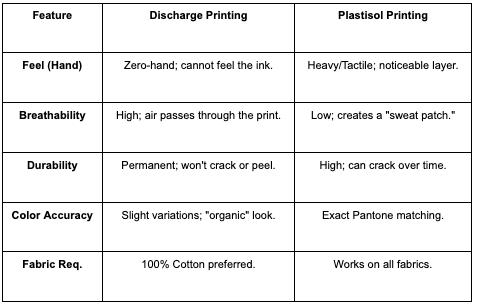
We’ve all worn that shirt, the one with a large, solid logo that feels like a rubber mat. In the world of custom apparel, this is known as a "sweat patch." Because discharge ink doesn't clog the weave of the fabric, the garment remains breathable. This is why premium outdoor and lifestyle brands almost exclusively use water-based and discharge processes.
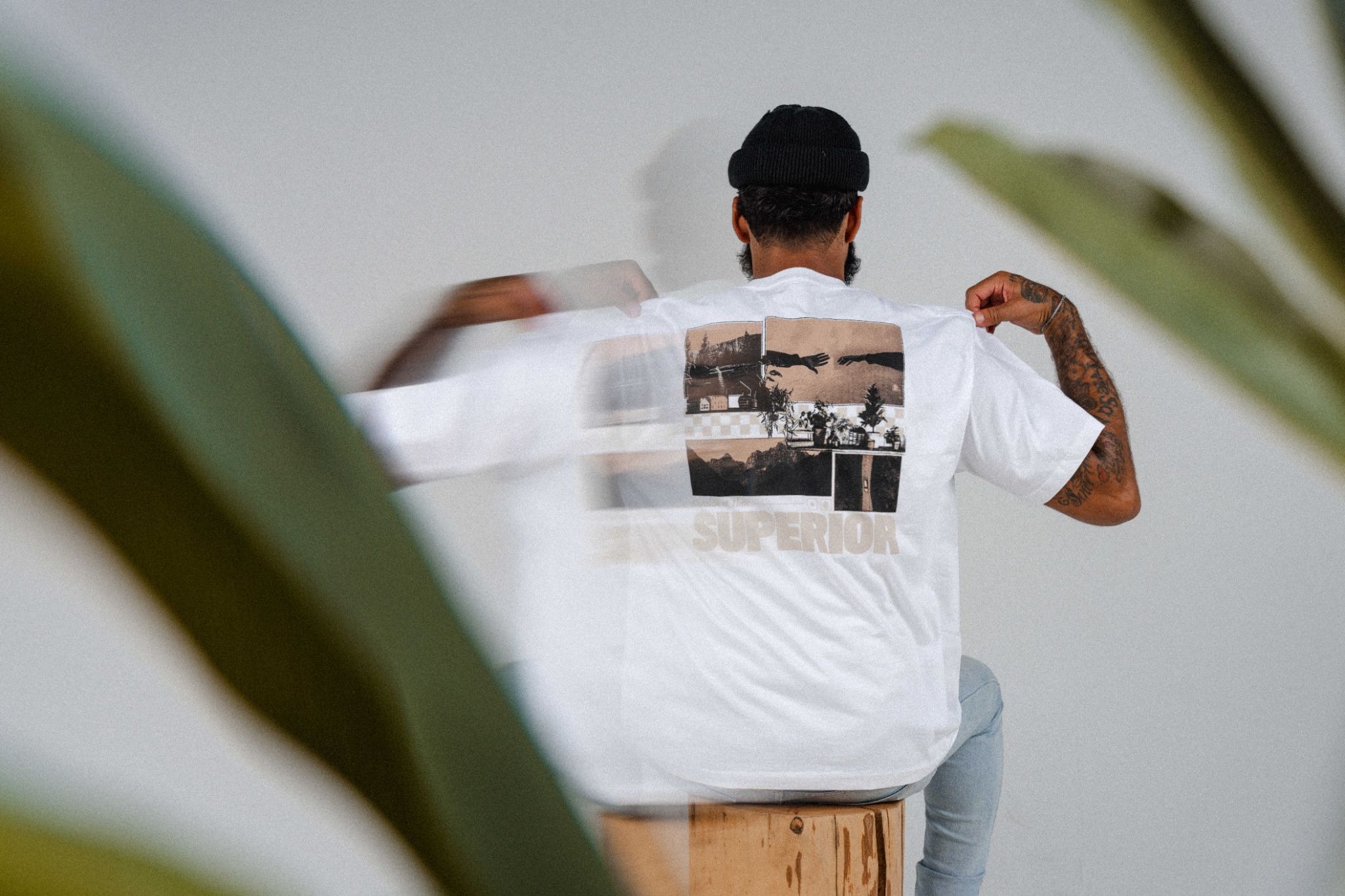
As a professional print shop, we don't just pick discharge because it looks cool; we pick it because it solves specific brand problems.
Discharge printing is the best choice for dark-colored, 100% cotton garments where a large print area is required and a soft, breathable finish is the priority.
However, it isn't a "one-size-fits-all" solution. Here is how to decide:
A gym owner wants a large back graphic on a black tri-blend tee. Using plastisol would make the shirt heavy and trap sweat. By using a "tint-discharge" on a tri-blend, we achieve a vintage, soft-touch print that moves with the athlete.
A designer wants a "black-on-black" look. We use a clear discharge base on a black shirt. It removes the dye and leaves a ghostly, subtle "watermark" effect that is deeply premium and impossible to achieve with standard inks.
In the world of apparel, the "hand" refers to how a print feels to the touch. A "heavy hand" which is that thick, rubbery shield of plastic common in cheap promo shirts, often leads to what we like to call a "sweat patch" and discomfort. For modern brands, a soft-hand feel is a non-negotiable for several reasons:
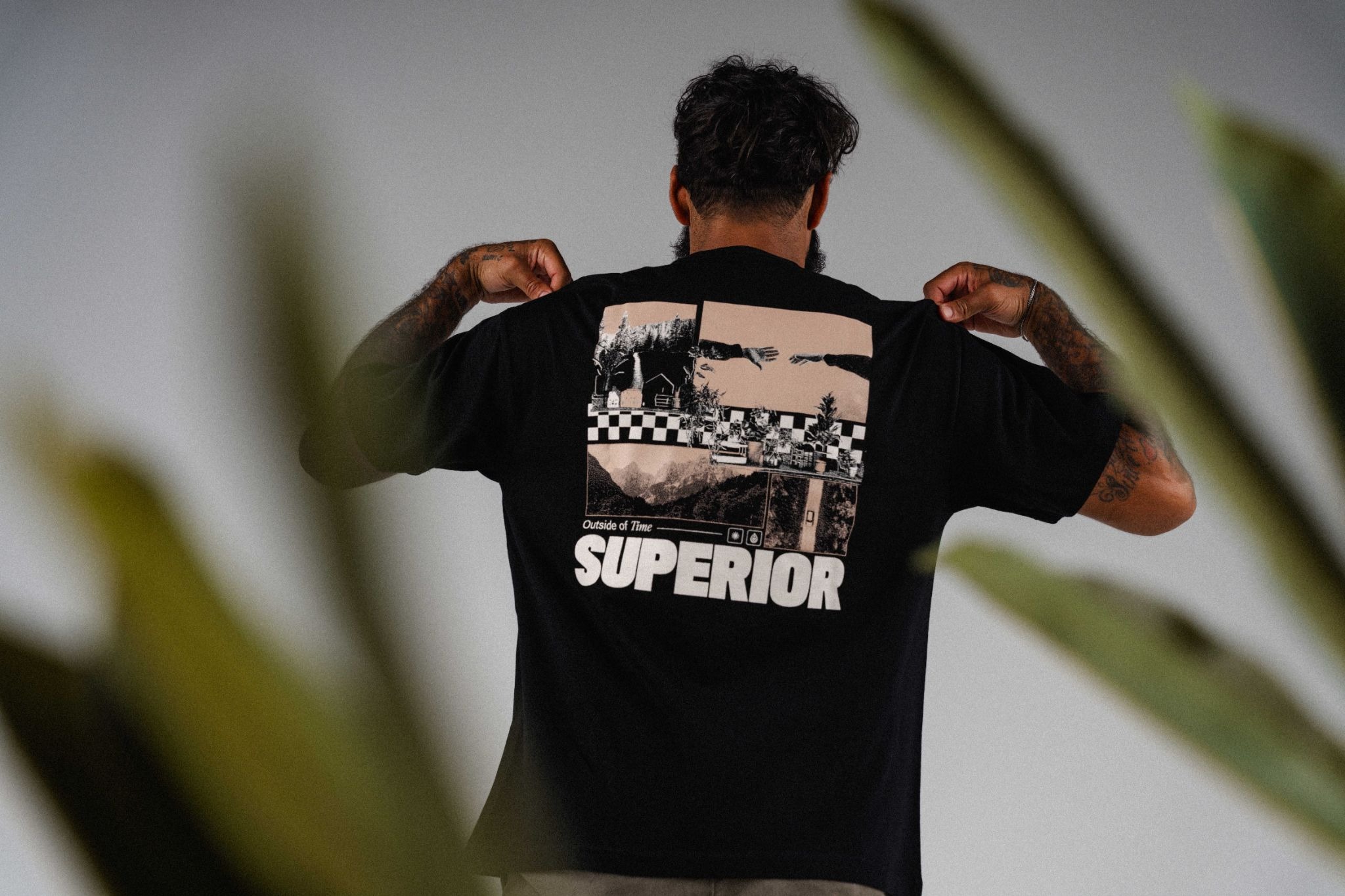
Scaling a merch program requires a balance between quality and efficiency. Discharge printing is the "secret weapon" for high-volume brands that don't want to sacrifice the premium feel of water-based inks on dark garments.
Not every t-shirt is a candidate for discharge printing. Because the process involves a chemical reaction with the fabric’s dye, the material composition is critical:
Choosing the right ink is only half the battle; choosing the right partner is what brings your vision to life. At Superior Ink, we don't just print shirts, we build sustainable, scalable brands.
Does discharge ink smell?
During the printing process, there is a distinct odor due to the activator. However, once the garment is cured and washed, the smell is completely gone. At Superior Ink, we use high-standard filtration to ensure safety. It is possible however if we are going straight from production floor to poly bags for ecoomerce that the bag will retain a slight oder. To mitigate this, we allow the garments to sit for 24 hours prior to our bagging process to let the ink and fabric have a breathing period.
Can you discharge on any color?
Most colors work well, but certain dyes (like Royal Blue or some Purples) are "stubborn" and do not discharge to a clean white. Our team audits your garment choice to ensure it's compatible with the ink chemistry.
Is discharge printing eco-friendly?
Yes, especially compared to PVC-based plastisol. Discharge is a water-based process. While it requires an activator, the lack of plastic resins makes it a much more sustainable choice for custom apparel production.
Partner with Superior Ink for Premium Custom Apparel
Choosing the right ink is a technical decision that has a massive impact on your brand's perceived value. At Superior Ink, we don't just take orders; we act as your production consultants.
From our high-end water-based and discharge capabilities to our full-service 3PL and creative design, we help brands move from "basic merch" to "premium retail." We understand the nuances of fabric reaction, ink chemistry, and the high-performance needs of modern brands.
Discharge printing is more than just a technique; it’s a commitment to quality. By removing the barrier between the wearer and the fabric, you create a product that people actually want to wear. If you’re looking to scale your custom apparel with a soft-hand feel that screams "premium," discharge is the path forward.


